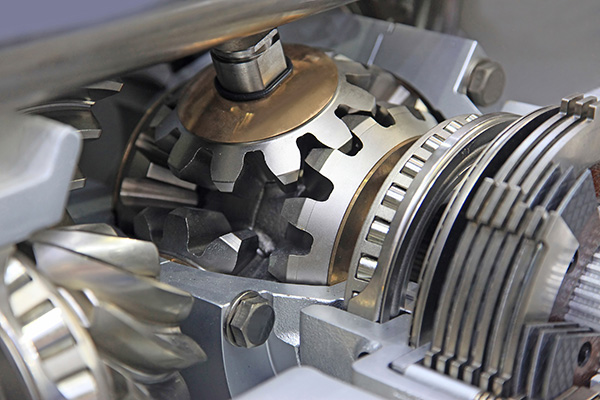
Mercedes-Benz 4MATIC is designed to deliver power with confidence in rain, snow, curves, and quick acceleration. Most drivers do not think about the transfer case when everything feels normal. The vehicle simply grips, turns, and responds the way a Mercedes-Benz should.
When the transfer case starts failing, that confident feel can change. The vehicle may shudder, bind, vibrate, hesitate, or feel less stable during turns. Those symptoms can be easy to blame on tires, alignment, or suspension, but the transfer case is one of the key parts that needs to be checked.
What The Mercedes-Benz 4MATIC Transfer Case Does
The transfer case helps send power from the transmission to the front and rear wheels. In a 4MATIC system, that power split helps the vehicle maintain traction when road conditions change. The transfer case has to work with the drivetrain, wheel speed data, tires, suspension, and electronic controls.
When it is healthy, the driver should not feel the system working. Power moves where it needs to go without binding or harshness. When internal parts wear, fluid breaks down, or the system cannot control torque correctly, the vehicle can begin to feel rough, tight, or unpredictable.
Mercedes-Benz 4MATIC Shudder During Turns
One of the most common transfer case symptoms is shuddering during low-speed turns. Drivers may notice it while parking, backing out of a driveway, turning into a tight space, or making a slow U-turn. The vehicle may feel like it is hopping, dragging, or resisting the turn.
That feeling can happen when the transfer case is not allowing the front and rear driveline to rotate at the correct difference in speed. In a turn, the wheels do not all travel the same distance. If the transfer case is binding, the drivetrain can feel wound up, and that stress can be felt through the steering wheel, the floor, or the vehicle's body.
Traction Problems In Rain, Snow, And Loose Roads
A failing transfer case can affect how the vehicle uses traction. The system may not send power cleanly, or it may engage in a way that feels delayed or uneven. In rain, snow, gravel, or slushy conditions, the Mercedes-Benz may feel less sure-footed than it used to.
Drivers may notice wheel slip, traction control activity, hesitation during takeoff, or a strange tugging sensation during acceleration. Tires are still important, of course. Worn or mismatched tires can create many of the same complaints. That is why transfer case concerns should always be checked along with tread depth, tire size, tire pressure, and overall tire condition.
Handling Changes And Drivetrain Vibration
Transfer case wear can also create vibration, especially during acceleration or steady cruising. The vibration may feel like it comes from underneath the vehicle rather than the engine. Some drivers describe it as a humming, pulsing, or roughness that changes with speed or throttle input.
Handling can feel different, too. A Mercedes-Benz with a drivetrain problem may not feel as settled in corners. It may feel tight during slow turns or less predictable when power is applied exiting a curve. Since suspension wear, axle problems, wheel bearings, and tire issues can be difficult to distinguish, the entire drivetrain and suspension should be inspected together.
Transfer Case Fluid Wear And Internal Damage
Transfer case fluid has an important job. It protects gears, bearings, clutches, chains, and other internal parts from heat and metal wear. Over time, fluid can break down or become contaminated. Low fluid from a leak can make the problem worse quickly.
Old or low fluid can lead to noise, rough engagement, shudder, and internal wear. Once metal particles or damaged components are involved, a simple fluid service may not be enough. Regular maintenance helps reduce that risk, especially on vehicles that see heavy traffic, mountain driving, winter roads, or higher mileage.
Tire Mismatch Can Strain A 4MATIC Transfer Case
Mercedes-Benz 4MATIC systems can be sensitive to tire differences. If one tire is newer, one tire is a different brand, or the tread depths are uneven, the rolling diameter can vary from wheel to wheel. The system may interpret that difference as wheel slip or drivetrain movement that needs correction.
That extra stress can affect the transfer case over time. A tire issue may create binding, vibration, warning messages, or traction control behavior that feels like a mechanical failure. Before replacing drivetrain parts, the tires should be measured carefully. Sometimes the root problem starts with a tire mismatch, not the transfer case itself.
Why Mercedes 4MATIC Diagnostics Should Come First
Transfer case symptoms should be tested before any major repair is recommended. A scan tool can help, but codes alone are not enough. A proper inspection may include a road test, fluid check, tire measurements, drivetrain inspection, mount checks, sensor data review, and a look at related suspension parts.
The goal is to confirm whether the transfer case is failing or whether another part is creating the same symptom. Axles, differentials, driveshafts, wheel speed sensors, tires, and worn bushings can all affect how 4MATIC feels. Careful testing helps protect the owner from unnecessary repairs and helps fix the actual cause.
Get Mercedes-Benz 4MATIC Transfer Case Repair In Denver, CO, With MB Clinic
If your Mercedes-Benz shudders in turns, vibrates during acceleration, feels tight while parking, or has changing traction in bad weather, MB Clinic in Denver, CO, can check the 4MATIC system and transfer case.
For Mercedes-Benz transfer case diagnostics, service, and repair, contact us to schedule an appointment.