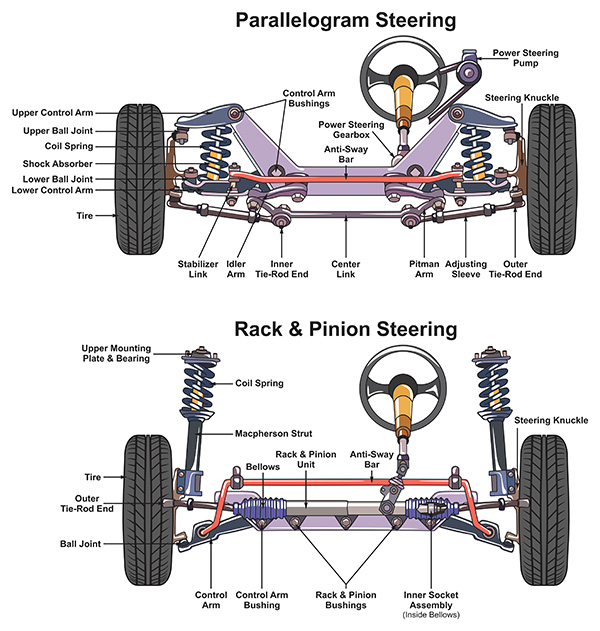
A steering rack can be one of the more expensive components to replace on a Mercedes-Benz, so it makes sense to ask whether the original unit can be rebuilt instead. In some cases, rebuilding is a practical option. In others, the rack has enough mechanical, hydraulic, or electronic damage that replacement is the more dependable repair.
The answer depends heavily on the Mercedes-Benz model and the type of steering system it uses. Older vehicles commonly use hydraulic power steering, while many newer models use electric power steering with motors, sensors, and control electronics built into the rack. We need to know exactly what failed before deciding whether rebuilding is realistic.
Hydraulic Steering Racks Are Sometimes Good Rebuild Candidates
A hydraulic rack uses pressurized power steering fluid to assist steering. Internal seals keep that fluid contained while the rack shaft moves from side to side.
If the problem is primarily worn seals and the shaft, housing, gears, and internal surfaces are still in good condition, rebuilding can make sense. You can disassemble, clean, inspect, reseal, and test the rack before it goes back into service. The condition of the hard parts is what determines whether a rebuild is worth doing.
Corrosion or Mechanical Wear Can Rule Out a Rebuild
New seals cannot compensate for a damaged rack shaft. Rust, pitting, deep scoring, or excessive wear on the sealing surfaces can cause a rebuilt rack to start leaking again even after fresh seals are installed.
We also look for looseness in the internal gears and bushings. A rack that leaks but still feels mechanically tight is a different situation from one that also clunks, binds, or has excessive steering play. During an inspection, we evaluate the complete unit rather than focusing only on the visible fluid leak.
Electric Mercedes-Benz Steering Racks Are More Complicated
Many newer Mercedes-Benz models use electric power steering instead of a traditional hydraulic system. These racks include an electric assist motor, torque sensors, position sensors, wiring, and electronic control components.
A failure in one of those areas changes the rebuild conversation significantly. Some specialist rebuilders can repair certain electronic steering racks, but not every design is serviceable and not every internal component is available separately. If the motor, control electronics, or internal gearing is severely damaged, installing a properly matched replacement rack may be the stronger option.
Programming and Calibration Can Be Part of the Repair
Replacing or repairing a modern steering rack is not always a purely mechanical job. Depending on the Mercedes-Benz model, the steering system can require programming, coding, initialization, or steering-angle calibration after the rack is installed.
That step matters because the steering system communicates with stability control, driver-assistance systems, and other vehicle electronics. A rack that physically bolts into place still has to communicate correctly with the vehicle. At our shop, we account for those procedures when comparing the real cost of rebuilding versus replacing the assembly.
A Rebuilt Rack Is Only as Good as the Rebuilding Process
There is a large difference between replacing a few seals and properly rebuilding a steering rack. A quality rebuild should involve complete disassembly where applicable, careful measurement, replacement of worn components, proper seals, and testing before the unit is installed.
We also consider who performed the rebuild and what warranty it comes with. A low-cost rebuilt rack is not a bargain if it begins leaking, develops internal play, or creates electronic faults a few months later. Paying labor twice can quickly erase the savings compared with installing a better replacement the first time.
Replacement Can Make More Financial Sense in Some Cases
Replacement becomes more attractive when the original rack has heavy corrosion, internal gear wear, electronic failure, damaged mounting areas, or previous unsuccessful repairs. Parts availability also plays a role. Some racks simply don't have enough serviceable internal components to make a dependable rebuild possible.
Regular maintenance can help us catch leaks, torn boots, and steering problems before additional damage develops, but no maintenance schedule can prevent every rack failure. When a rack does fail, we compare rebuild cost, replacement cost, warranty coverage, availability, and the condition of the rest of the steering system before recommending the next step.
The Rest of the Steering System Should Be Checked Too
A steering complaint does not always mean the rack itself is bad. Tie rods, control arm bushings, ball joints, steering shafts, hydraulic hoses on older models, and electrical supply problems on newer models can all create steering symptoms.
That is why diagnosis comes before a rebuild decision. If the rack is healthy and the actual problem is a hose, tie rod, or electrical fault, there is no reason to replace or rebuild it. Confirming the source first keeps an expensive steering repair focused on the component that actually failed.
Get Mercedes-Benz Steering Rack Service In Denver, CO, With MB Clinic
If your Mercedes-Benz is leaking power steering fluid, developing steering play, binding, or showing electric steering faults, MB Clinic in Denver, CO, can diagnose the system and determine whether the steering rack is a good rebuild candidate or should be replaced.
Schedule a steering system evaluation before committing to a major rack repair, so you know which option provides the better long-term result.