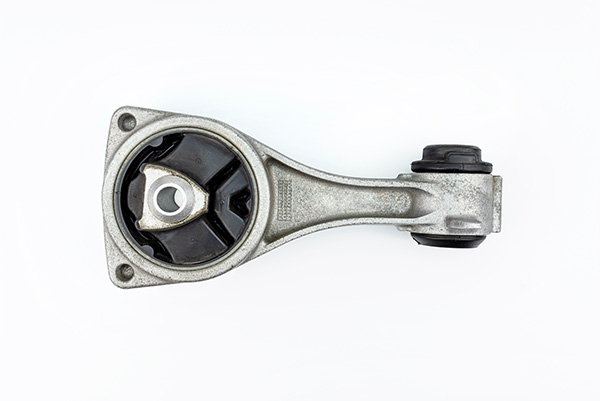
A worn transmission mount can make a smooth, quiet Mercedes feel rough and noisy. The signs often start small, then build into vibrations, thumps, and shifting issues that are hard to ignore. If your car has begun to feel less refined, especially when changing gears or taking off from a stop, the transmission mount may be the reason.
What a Transmission Mount Does in a Mercedes
The transmission mount secures the gearbox to the chassis and isolates vibration so the cabin stays calm. Most modern Mercedes models use rubber or fluid-filled mounts that absorb movement when the engine torques under acceleration.
When the mount ages, collapses, or tears, the transmission can sit lower or shift around, which sends noise and vibration into the body of the car.
Common Symptoms You Will Notice First
A failing transmission mount often shows up as a low, droning vibration through the seat or center console, especially when you shift into Drive or Reverse. You may hear a thump when you accelerate, lift off the throttle, or shift between gears. Some drivers report a buzzing or resonance at specific engine speeds, then a smoother feel once the car is cruising.
If the mount is badly collapsed, the shudder can be felt when climbing hills or when the transmission downshifts under load.
How to Tell It from Engine Mount Problems
Engine and transmission mount issues can feel similar, but there are clues that point to the transmission side. A vibration that gets worse in Reverse, or a clunk as the gearbox engages from Park into Drive, often traces back to the transmission mount. A steering wheel shake at idle leans more toward engine mounts, while a seat and floor vibration under light throttle tends to be transmission mount related.
Another hint is the movement you can feel in the shifter area or the center tunnel when taking off from a stop.
Why These Mounts Fail on Mercedes Vehicles
Time and heat are the usual causes. Rubber hardens and cracks, and hydraulic mounts can leak or lose their internal fluid. Transmission fluid or engine oil leaks speed up the breakdown of the rubber. Repeated stop-and-go driving and rough roads increase the strain as the drivetrain rocks forward and backward.
Temperature swings common in Colorado can also fatigue rubber over years of service, especially if the car sees short trips that never fully warm everything through.
What Happens If You Keep Driving
Allowing a failing mount to linger can create more than just an annoying shake. The extra movement can stress driveshaft joints, flex pipes, and exhaust hangers. Wiring, shift linkages, and cooler lines may be pulled or rubbed in ways they were not designed to handle. The transmission case and crossmember can make contact under hard acceleration, creating sharp knocks that sound like something major is breaking.
In severe cases, other mounts start working overtime and fail sooner.
How Technicians Confirm the Problem
Diagnosis starts with a visual inspection for collapsed height, torn rubber, or leaked hydraulic fluid around the mount. A controlled power-brake test can reveal excessive drivetrain movement while the car is held in gear. Technicians may use a pry bar gently on the crossmember to check for free play that should not be there.
It is advisable to inspect the engine mounts, differential mount, and exhaust supports simultaneously, as multiple worn mounts can compound their symptoms and mislead you.
What Replacement Involves and What Else to Check
Replacing a transmission mount is straightforward with the right equipment. The drivetrain is safely supported, the old mount and hardware are removed, and a new mount is installed to the correct height and alignment. Fresh hardware is recommended if the original bolts are stretched or corroded. After the new mount is in, a short road test checks for eliminated vibration and any remaining noises.
If some shake remains, attention turns to engine mounts, the giubo (a flexible rubber coupling) or driveshaft center support, and any misaligned heat shields or exhaust components that may have been damaged while the mount was deteriorating.
Get Smooth, Quiet Shifting Back With MB Clinic in Denver, CO
If your Mercedes has begun to thump when shifting or vibrate through the seat, a failing transmission mount may be the culprit. Schedule an inspection with MB Clinic in Denver. Our technicians can pinpoint the source of the noise, replace worn mounts with quality parts, and road test the car to confirm a smooth, refined feel.
Book a visit and bring back the calm, confident drive you expect.